The Centre for Climate Adaptation, Singapore Chapter (CCA) extends a cordial invitation to an event focusing on coastal resilience. With presentations from PUB, URA, and NPARKS, this gathering aims to convene erudite stakeholders engaged in coastal resilience. Then joined by The CCA New York City chapter, this occasion highlights the significance of international collaboration amidst shared coastal concerns. The event facilitates scholarly exchange, fostering connections among scholars, practitioners, and academics. The evening then launches a week-long exchange between students of New York City and Singapore in collaborative and exploratory research enriching coastal resilience knowledge across oceans. Join us as we forge a resilient coastal future and mitigate the challenges of climate change.
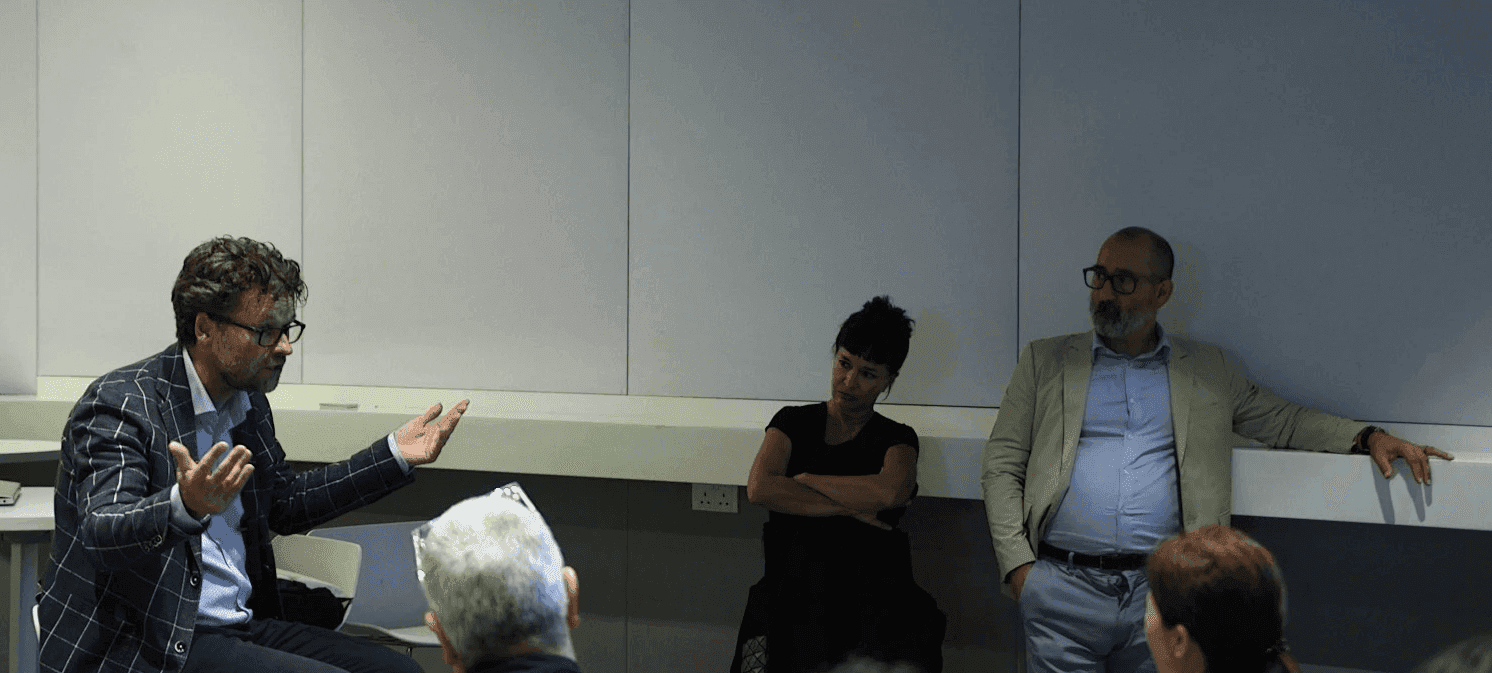
Maria Zuber, considered an iconic voice of MIT, sat down with two alumni to discuss topics of sustainable architecture.
Maria Zuber is Vice President for Research and E. A. Griswold Professor of Geophysics at MIT, where she is responsible for research administration and policy. She oversees MIT Lincoln Laboratory and more than a dozen interdisciplinary research laboratories and centers. She also oversees MIT’s Climate Action Plan for the Decade and is responsible for intellectual property; research integrity and compliance; research relationships with the federal government; and postdoctoral scholars and research staff. Zuber has held leadership roles associated with a dozen scientific experiments or instrumentation on ten NASA missions, serving as Principal Investigator of the Gravity Recovery and Interior Laboratory (GRAIL) mission. She is the first woman to lead a science department at MIT and the first to lead a NASA planetary mission.
The Singapore University of Technology and Design and the Centre for Climate Adaptation (CCA) are hosting a three-part event within the framework of the Singapore International Water Week 2024.
Layered upon one another, “Condensations” is entirely a public event that examines how (de)sign and the built environment intersect with issues of permanent climate change and strategies of adaptation.
The 3-part event -exhibition, panel presentations and workshop focus on the role integrative design can have in holistically addressing and communicating water challenges with a specific focus on generating resilience within vulnerable areas in the planet.
The discussion is therefore laid-out to fluidly connect three factions pivotal to the implementation of design strategies:
academia : research I education — design — praxis : finance I policy-making
The Archifest 2025 at Marina Bay Sands Expo and Convention Centre, guided by the theme : “Don’t (Just) Think Like An Architect!” - brought forth the exhibition of work by Center for Climate Adaptation (CCA) in conjunction with Singapore University of Technology and Design (SUTD) Architecture and Sustainable Design (ASD) booth. With the primary intention of showcasing the rich outputs of research by design, where CCA lies within the intersection between academia, education and industry. Guided by a growing body of work by the CCA, prototypes of machinic hybrids were explored within education.
Designing with Water. The Centre for Climate Adaptation (CCA) and the SUTD Sustainable Futures Centre hosted Condensations 2026 — a symposium, exhibition and workshop — as a partner event of Singapore International Water Week 2026, from 15 to 23 June.
Condensations 2026 advances a clear agenda: use design to strengthen coastal protection while sustaining the ecological and public life of the shoreline. The objective is to connect flood resilience, water management, habitat and inhabitation. Protecting the coast must become a shared project across buildings, landscapes, infrastructure and institutions.
The East Coast brief provides a concrete field of work. It asks how interventions distributed across different sites and responsibilities can contribute to a coherent coastal system. A building, a public route or a planted edge must be considered in relation to the water, land and infrastructure around it.
The three parts addressed this task at different scales — the symposium examined governance and value; the exhibition made territorial strategies and material investigations available for public scrutiny; the workshop translated the brief into site readings, architectural studies and group propositions:
panel : governance I water I value — exhibition : coastal prototypes I living lab — workshop : five days I one territory