16/6/26-18/6/26
CONDENSATIONS SG26 with SIWW
PART 02
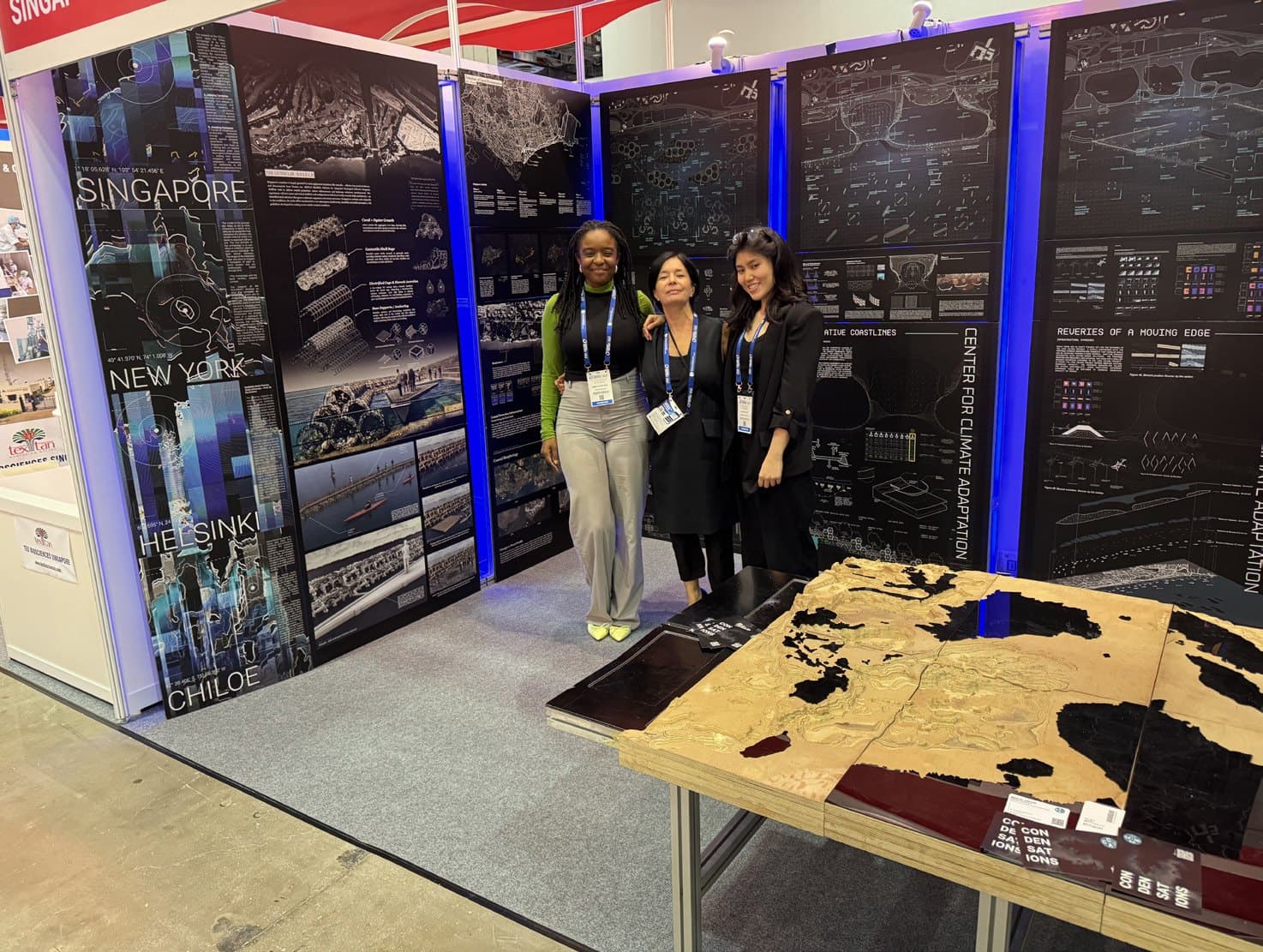
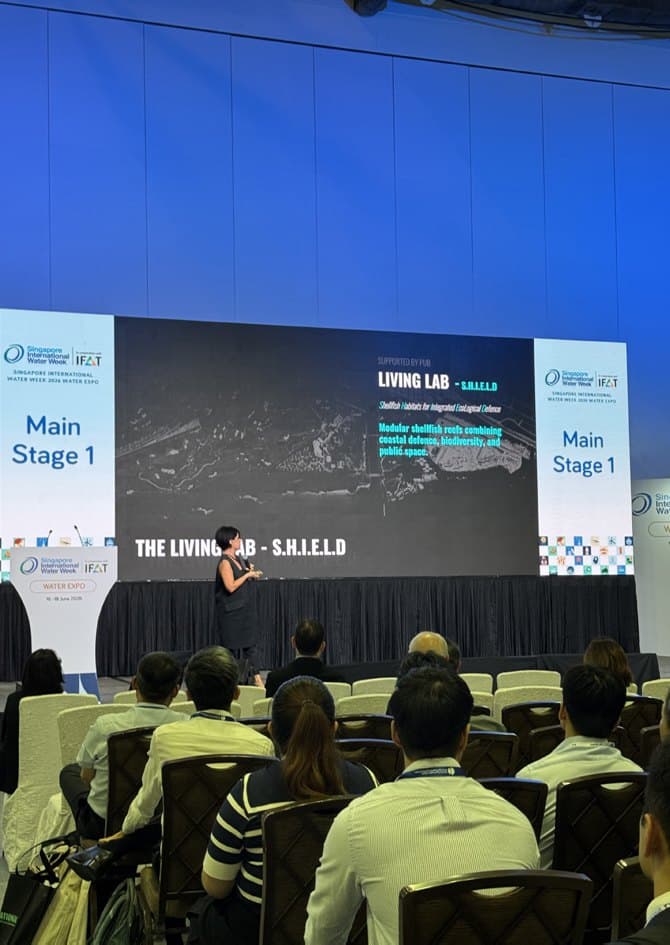
Condensations, part 02, took the shape of an exhibition at Singapore International Water Week 2026 (SIWW), which spanned 16 – 18 June 2026, and was held at Marina Bay Sands. The Centre for Climate Adaptation (CCA) placed its territorial plans, research plates and physical model within SIWW, connecting the scale of a changing coastline to investigations of reservoirs, ecological interfaces and modular coastal components.
The CCA exhibition brought territorial drawings, models and material studies into SIWW. Read together, the works set out an approach to coastal protection that connects landform, water management, ecological interfaces and public space. The plan establishes relationships across a territory; the section tests how those relationships meet the ground and water; the component study examines how an intervention might be assembled and maintained.
The 2026 plates connect iterative coastal prototypes with the Living Lab and S.H.I.E.L.D research. Their value is in making alternatives specific enough to question. They describe spatial and material directions for further investigation, including the technical, ecological and operational assessments needed before implementation. Presenting these studies together made their common agenda visible: protection should be developed as part of a larger spatial and environmental system. The exhibited work provided a research basis for discussion, rather than a claim that the proposals were ready for construction.
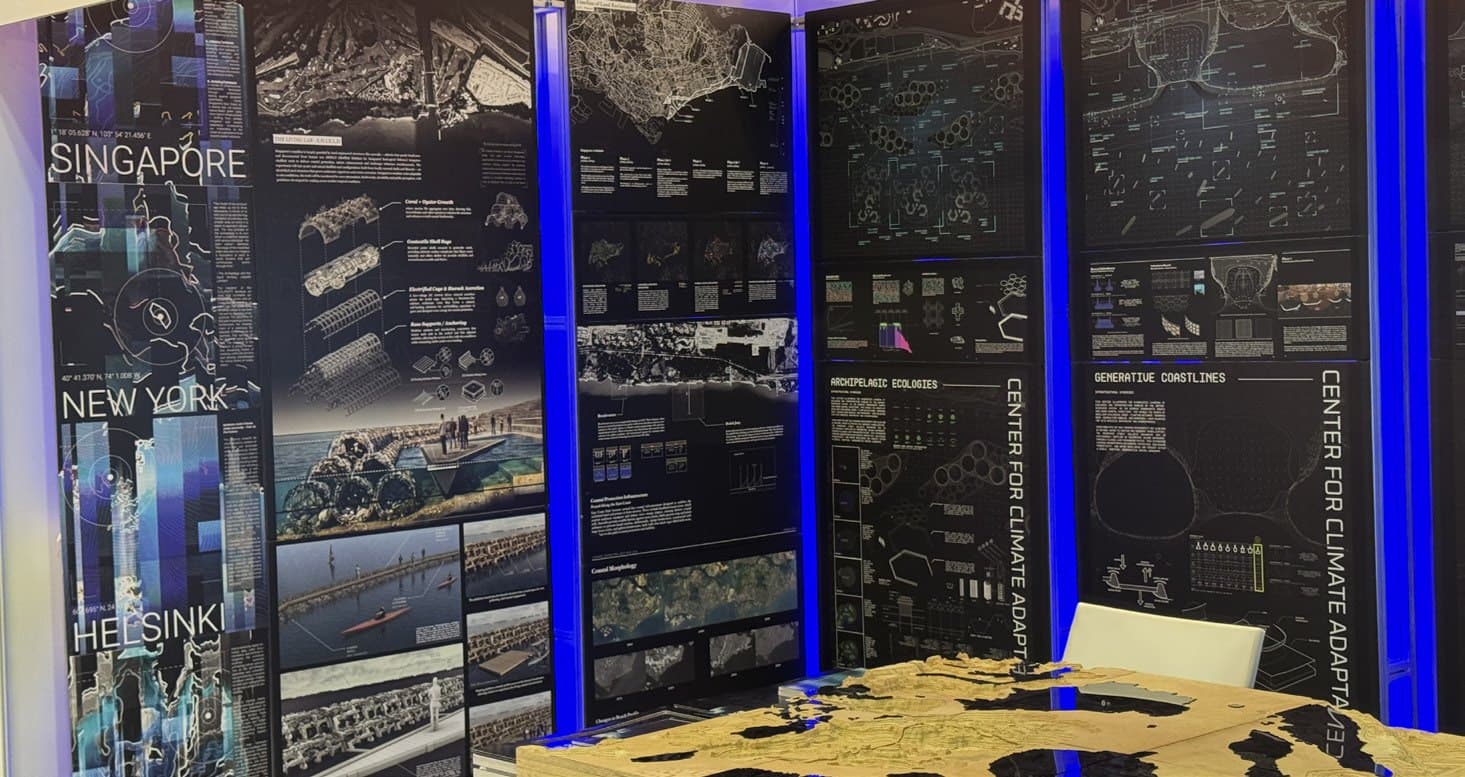
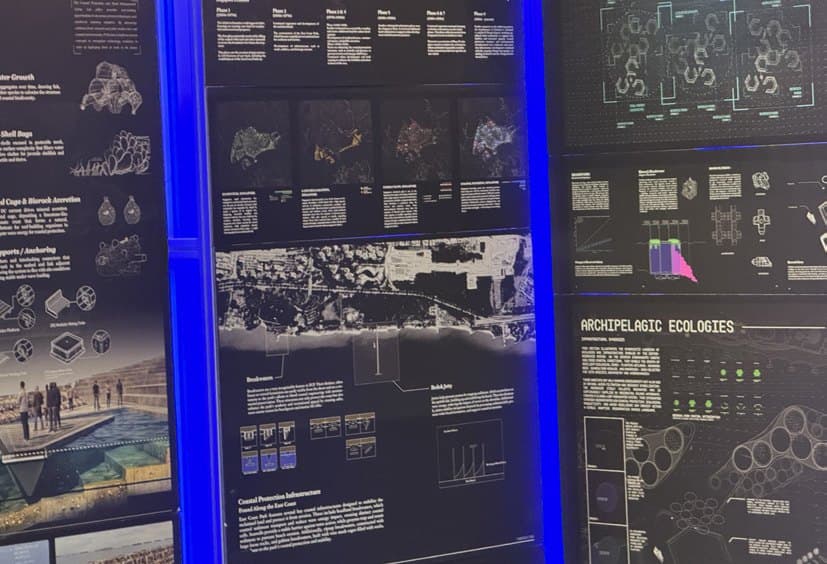
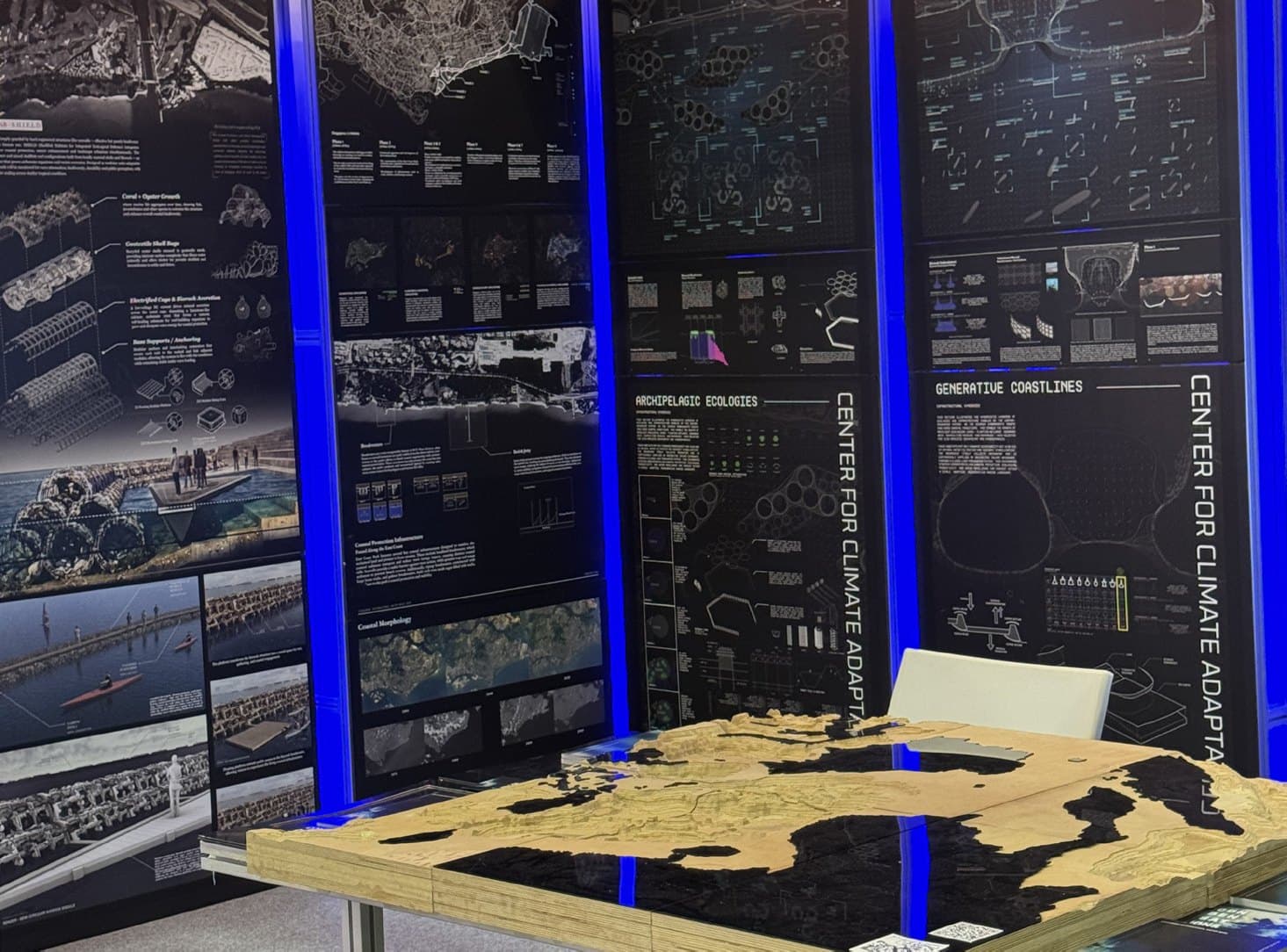
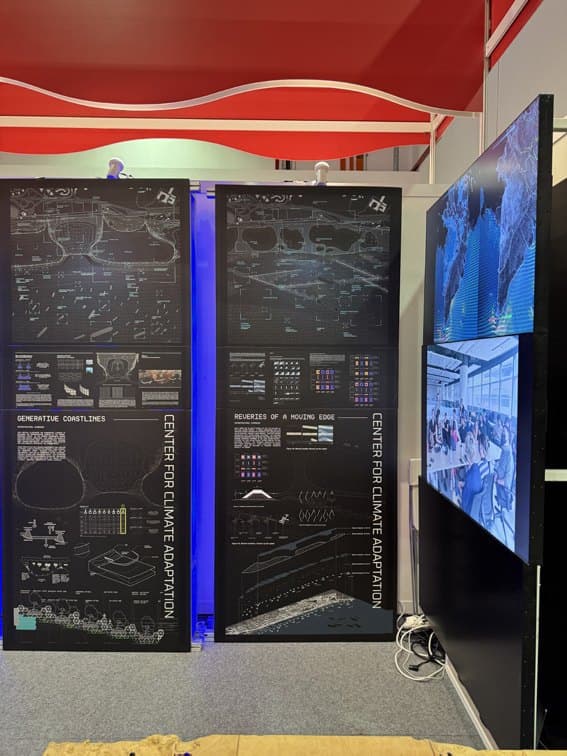
A coast drawn as a system. The exhibition’s plan studies place reservoirs, connections and coastal structures within a territorial field. Their value is in making relationships available for comparison.
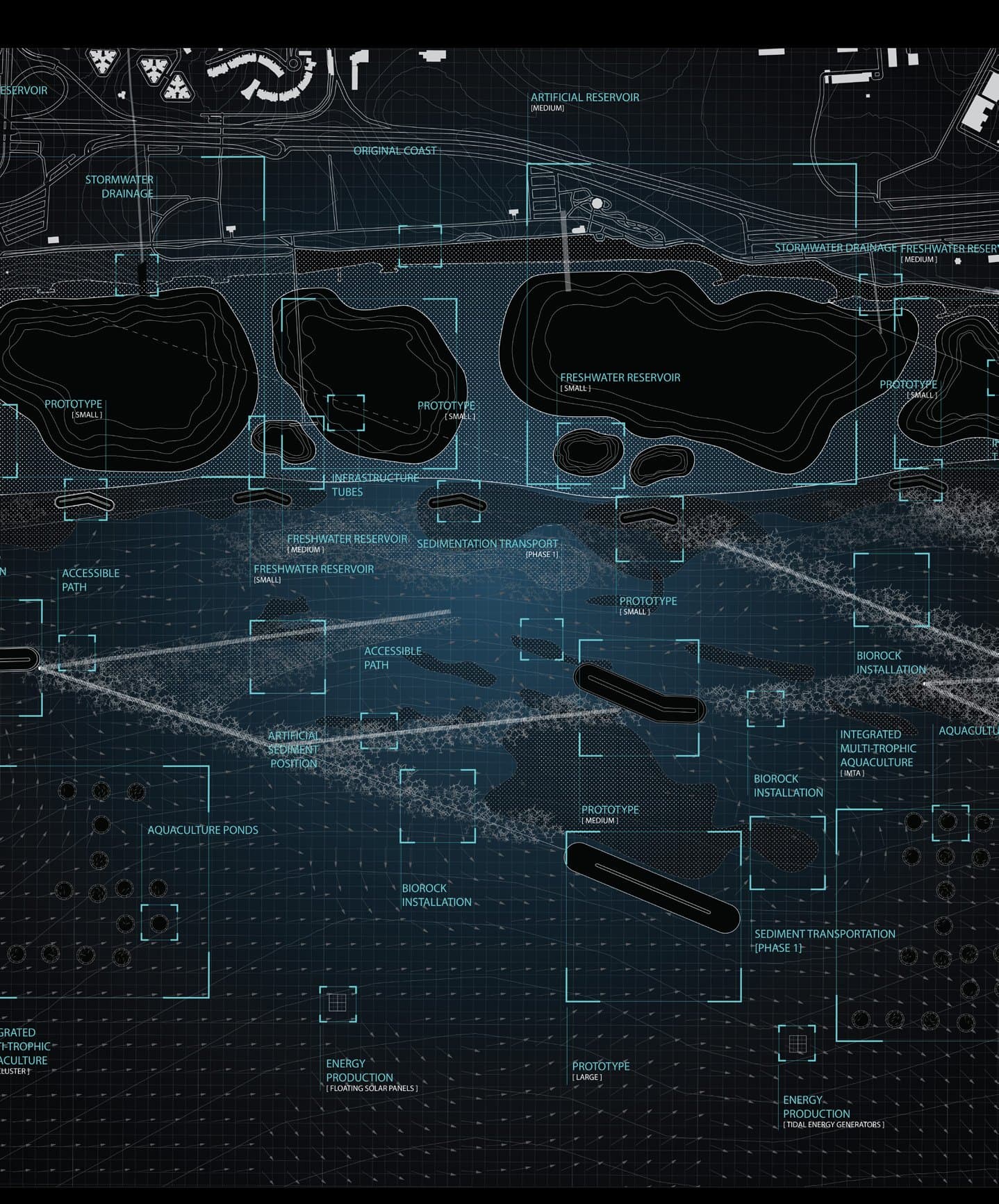
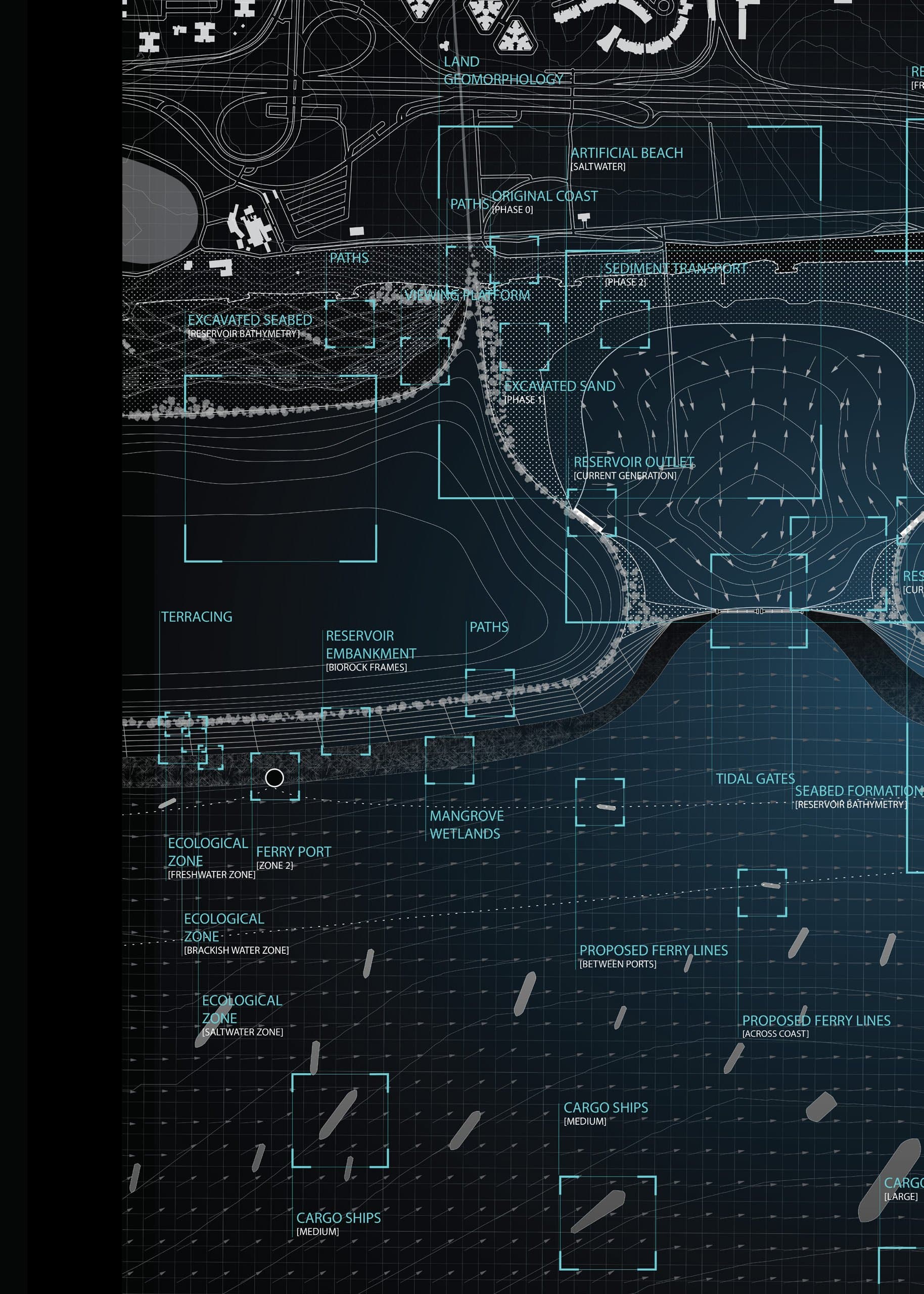
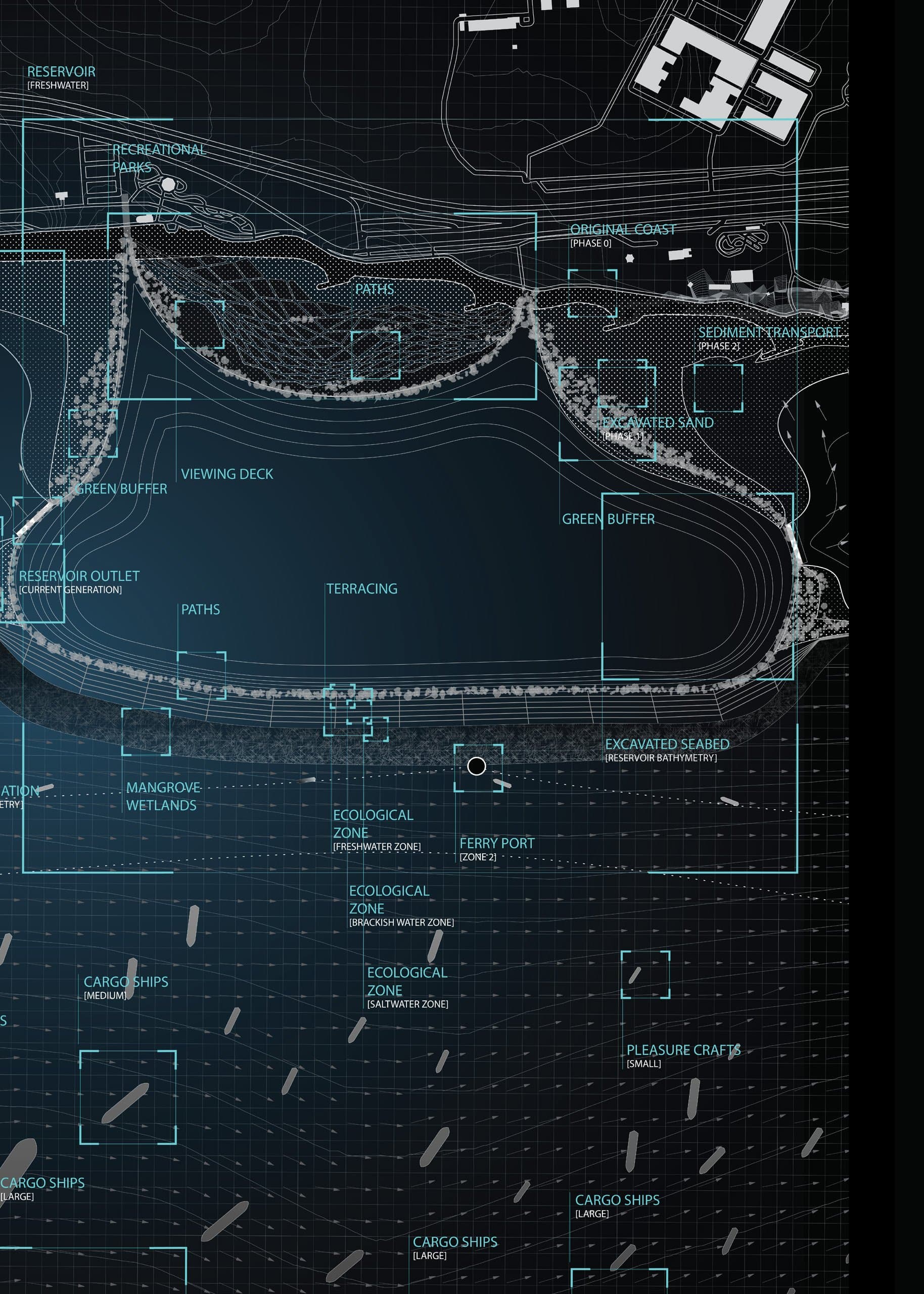
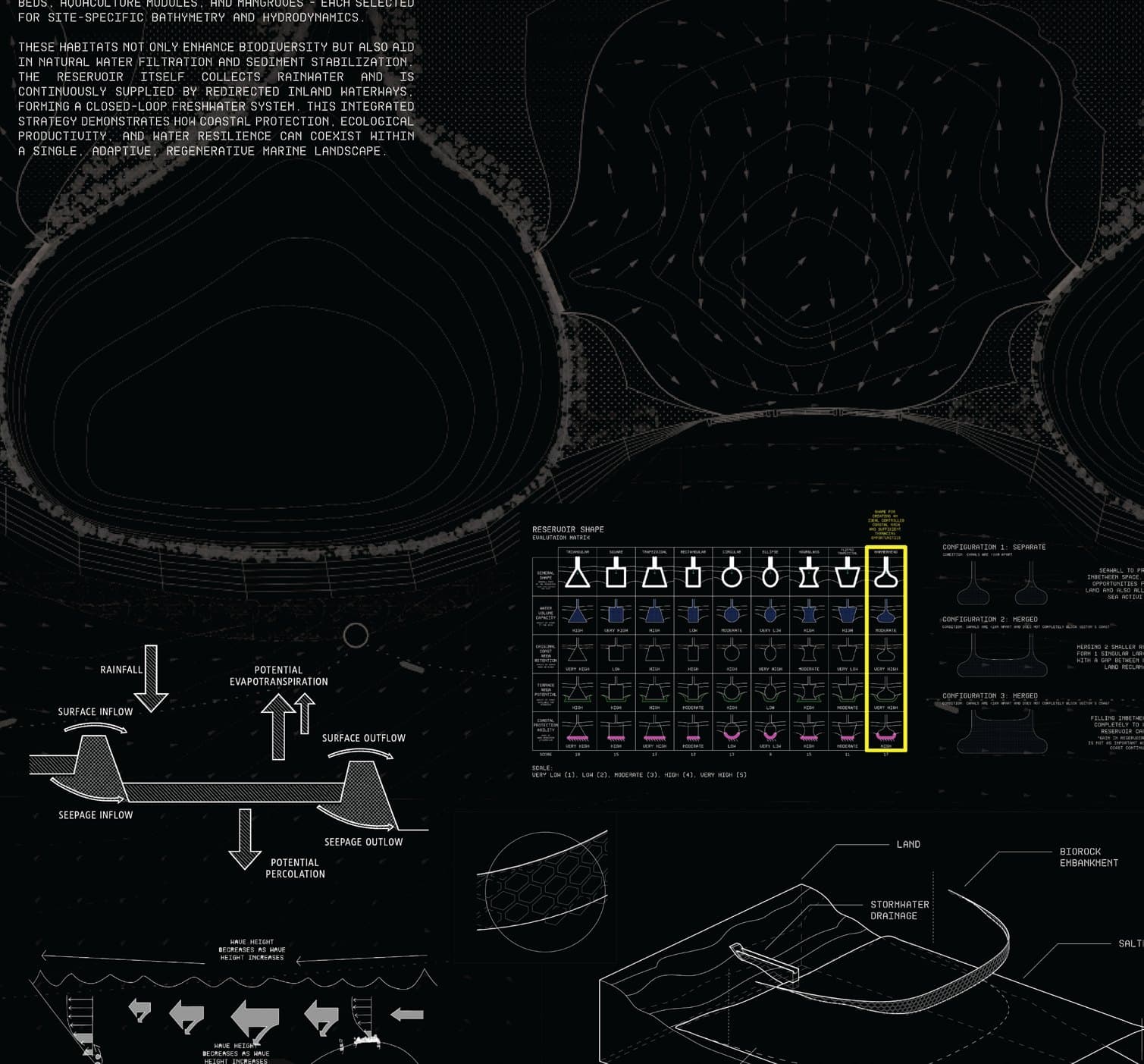
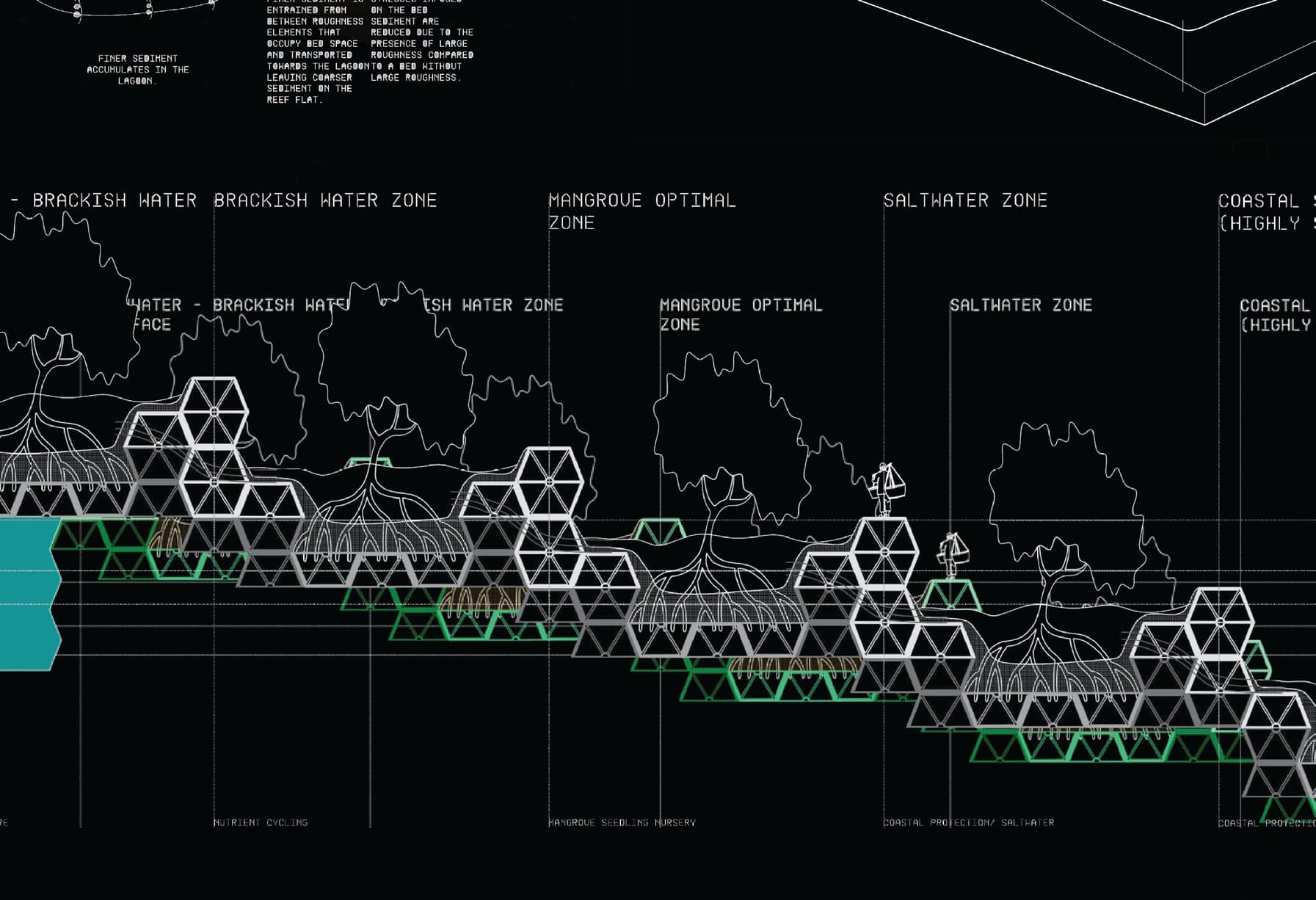
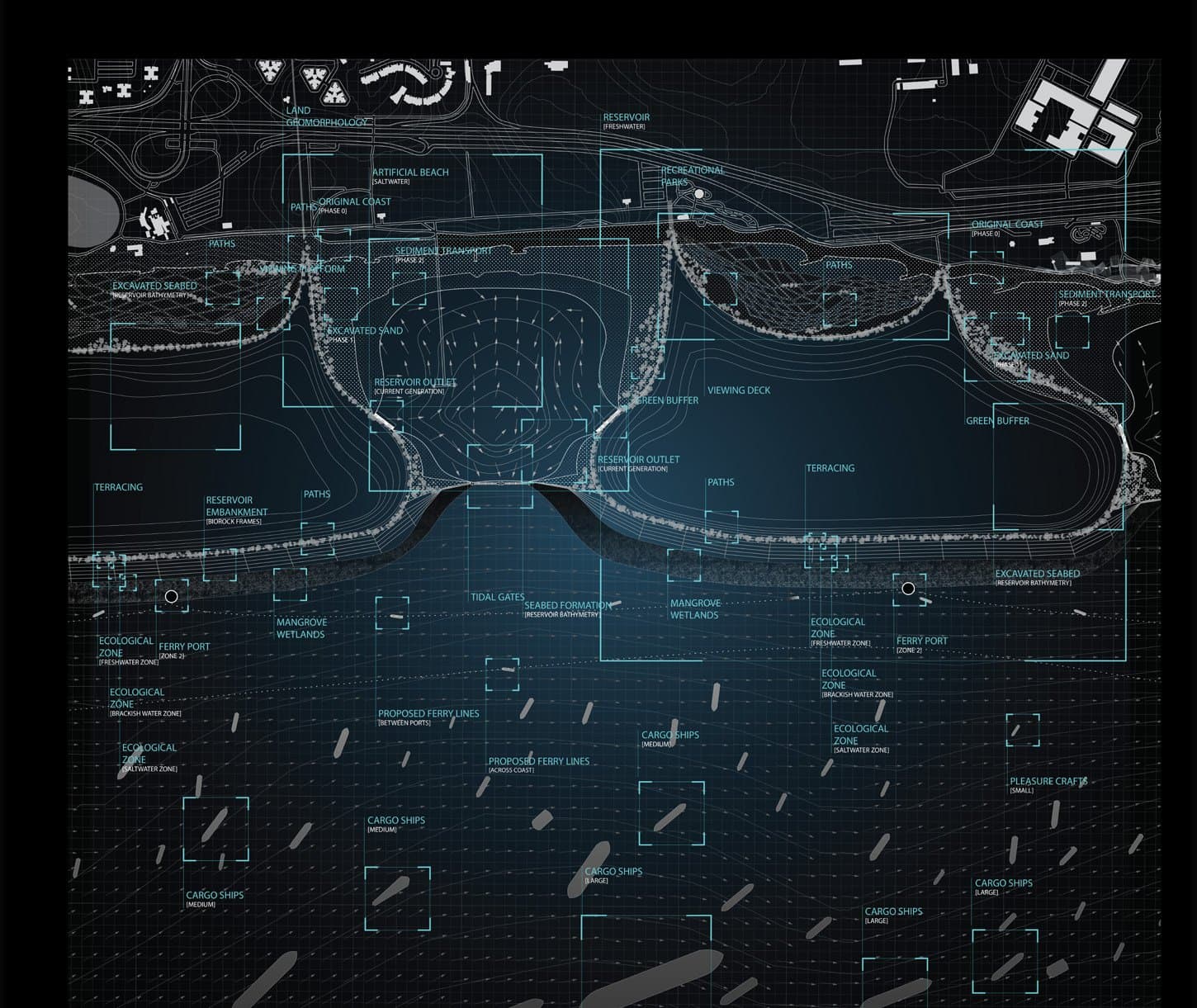
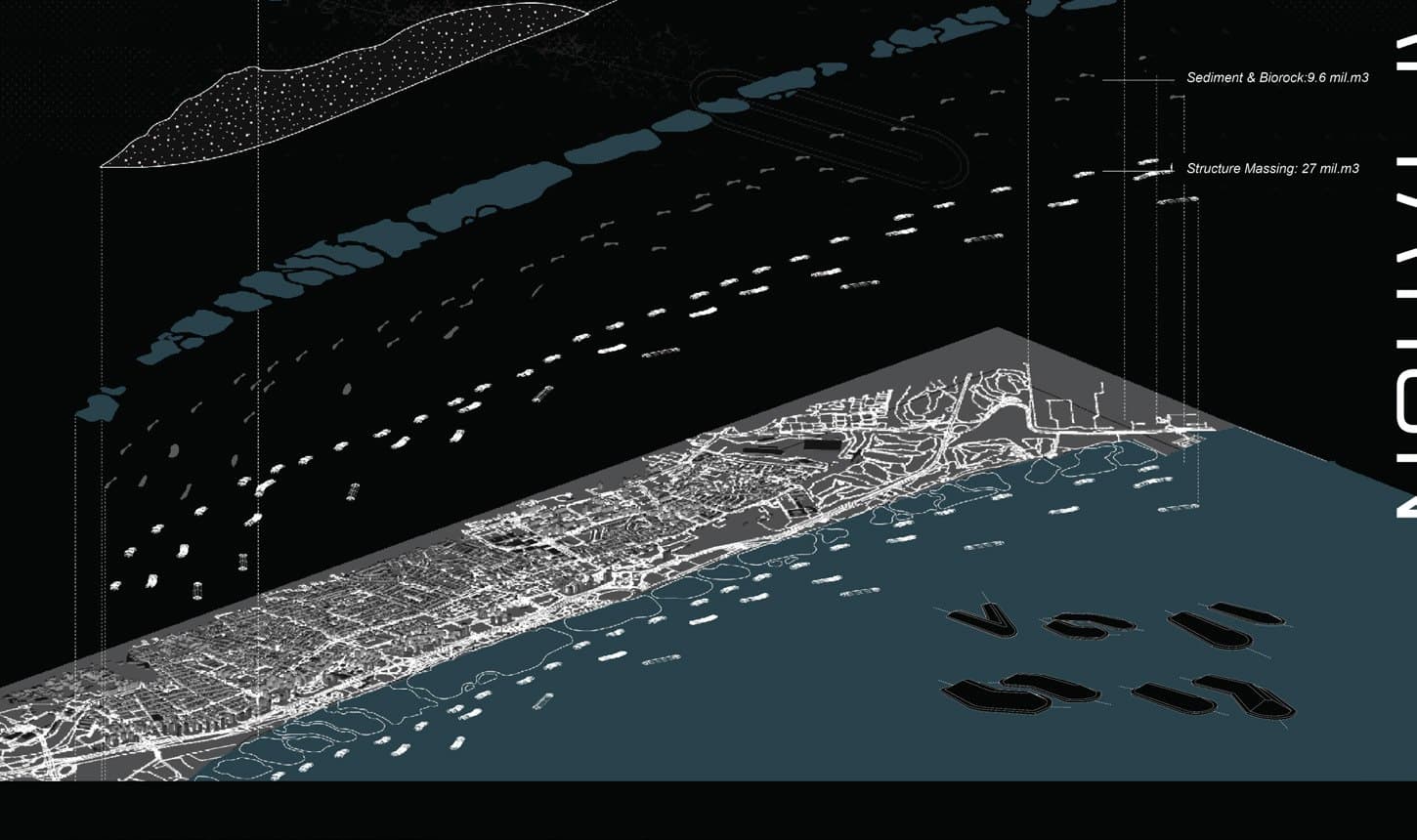
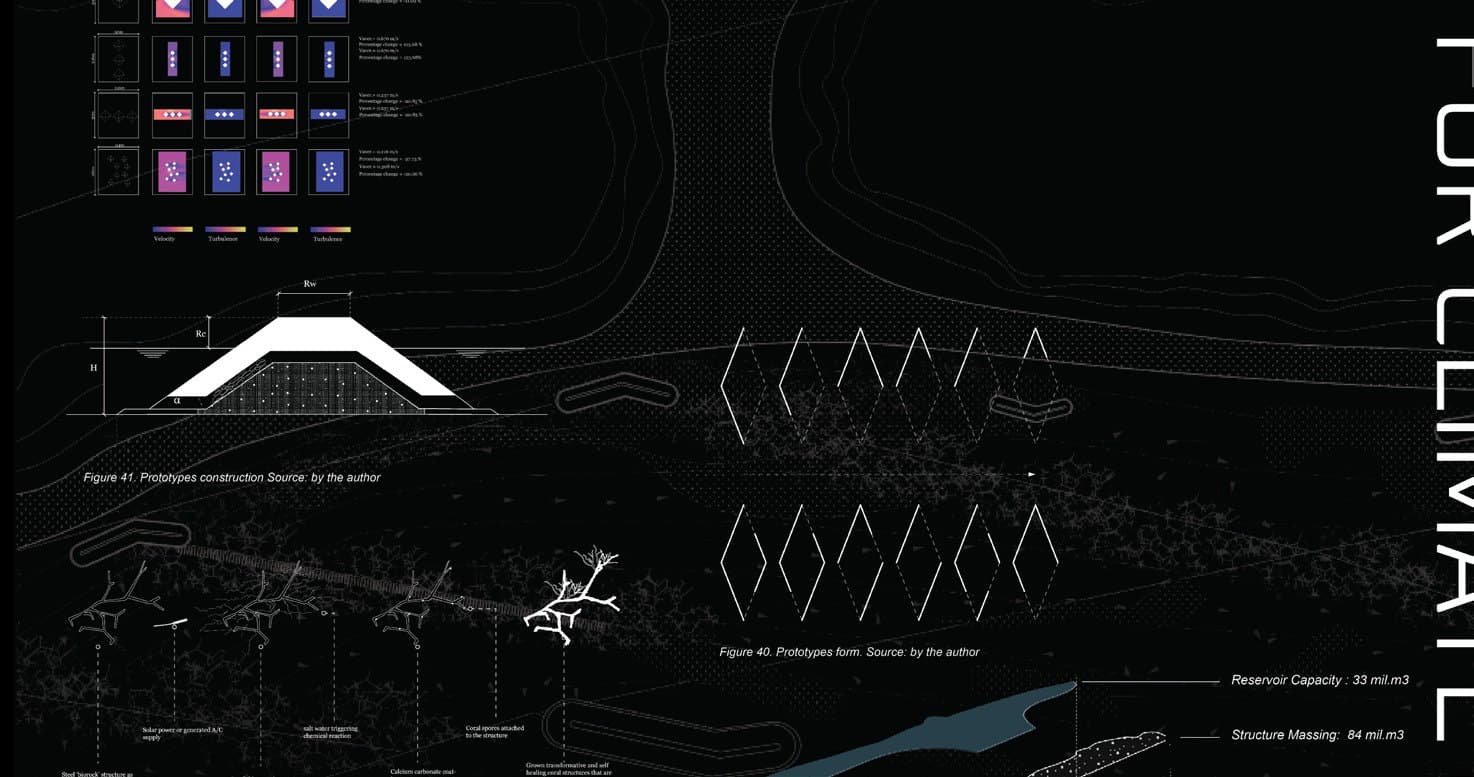
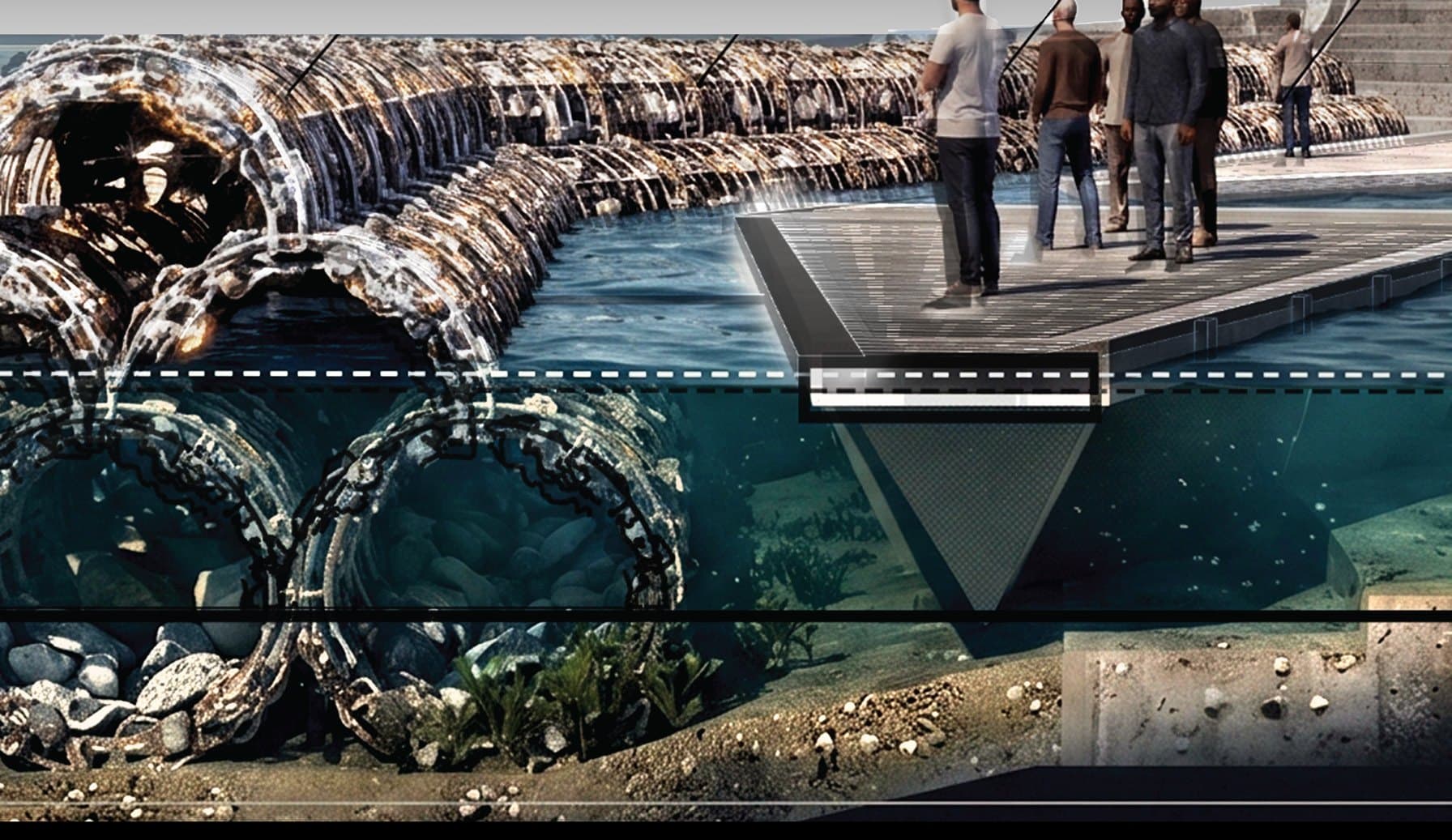
The proposal brings coffer-reservoirs, embankments and ecological zones into one coastal configuration. Its section places freshwater storage in relation to marine habitat and a constructed edge. The agenda is to examine these functions as an interdependent system. Further development should establish how water is exchanged, how interfaces are maintained and what conditions determine the configuration’s protective and ecological performance. The drawings provide a spatial basis for that assessment.
Infrastructural Synergies:
Store: Reservoir configurations explore the collection and retention of freshwater.
Support: Habitat zones are proposed in relation to salinity, bathymetry and coastal processes.
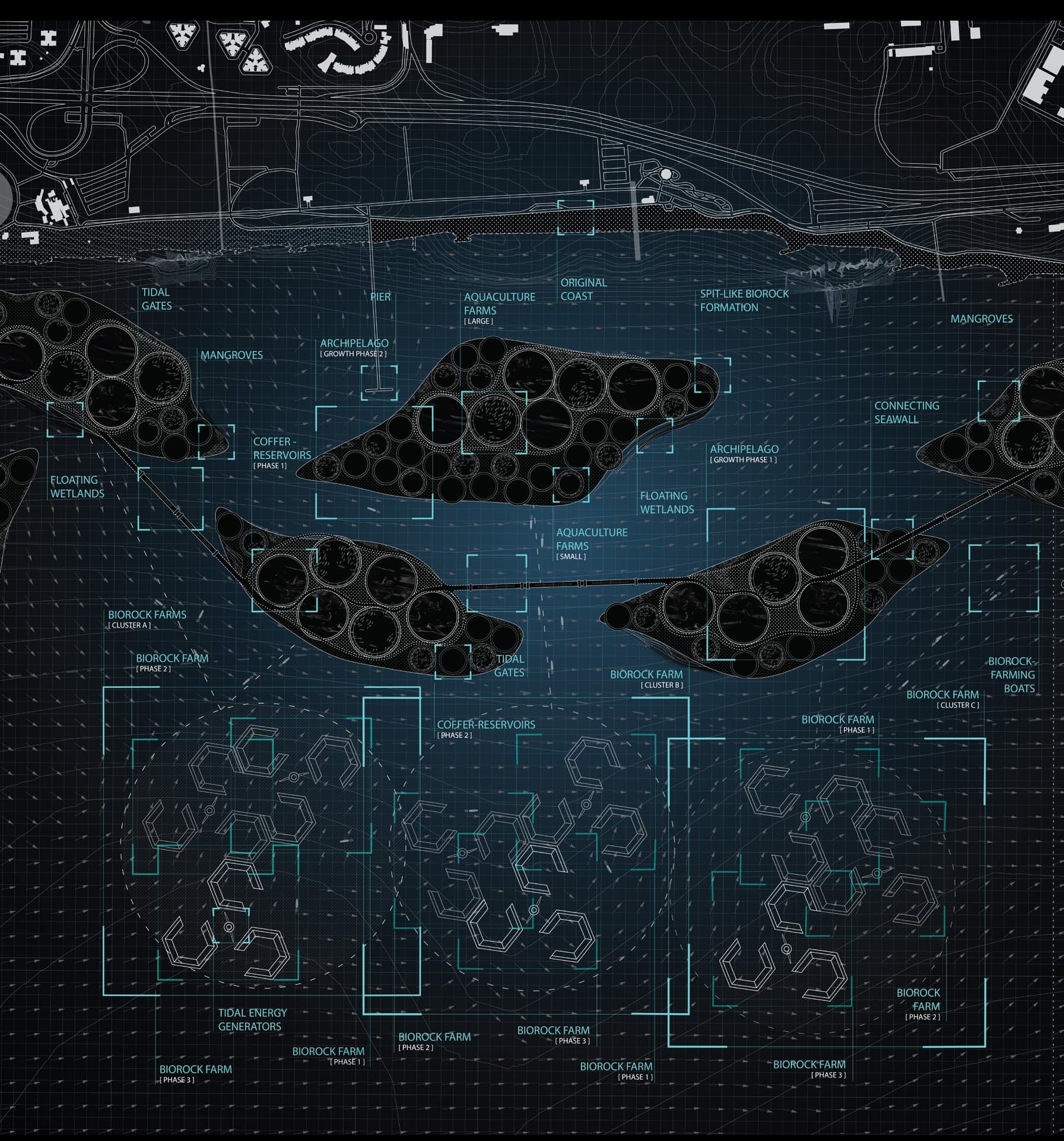
The exhibited research presents a dynamic archipelago as an alternative spatial proposition for the coast. It studies the relationship between embankments, water bodies and the possibility of change over time. The territorial drawing is therefore a framework for investigating how different coastal conditions might be organised and connected.
Adaptability must be made specific. Further work should identify which components can change, what would trigger a change, and how each phase affects water, habitat, access and maintenance. The design question is whether a sequence of interventions can sustain a coherent protective strategy while responding to evolving conditions. This requires explicit assumptions and comparison between phases, supported by appropriate technical and ecological assessment. The exhibition establishes the proposition and its areas of enquiry; it does not demonstrate completed performance.
Shellfish Habitats for Integrated Ecological Defence
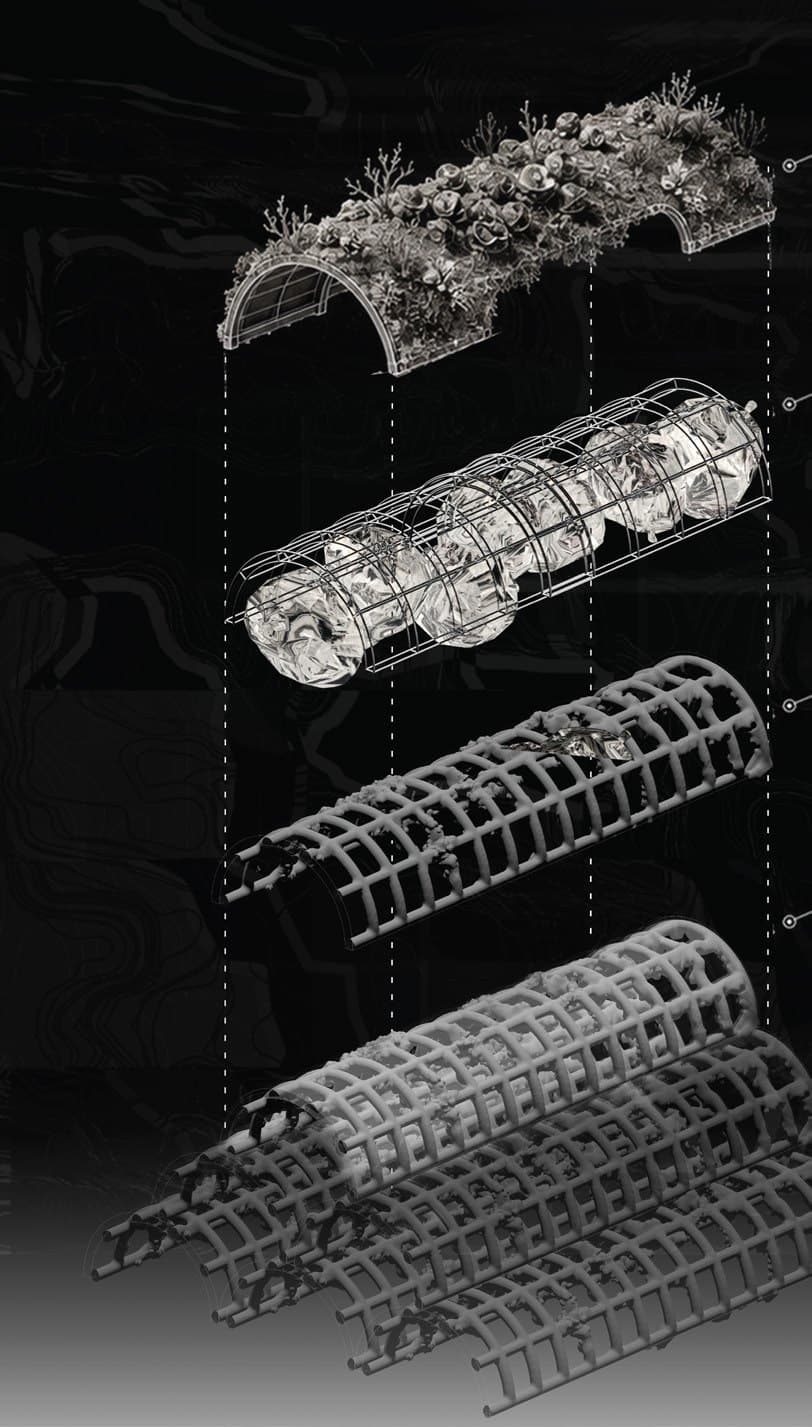
Exploded Assembly:
Habitat: Shellfish and coral growth.
Substrate: Shell-filled geotextile bags.
Frame: Electrified cage and mineral accretion.
Support: Base units and anchors.
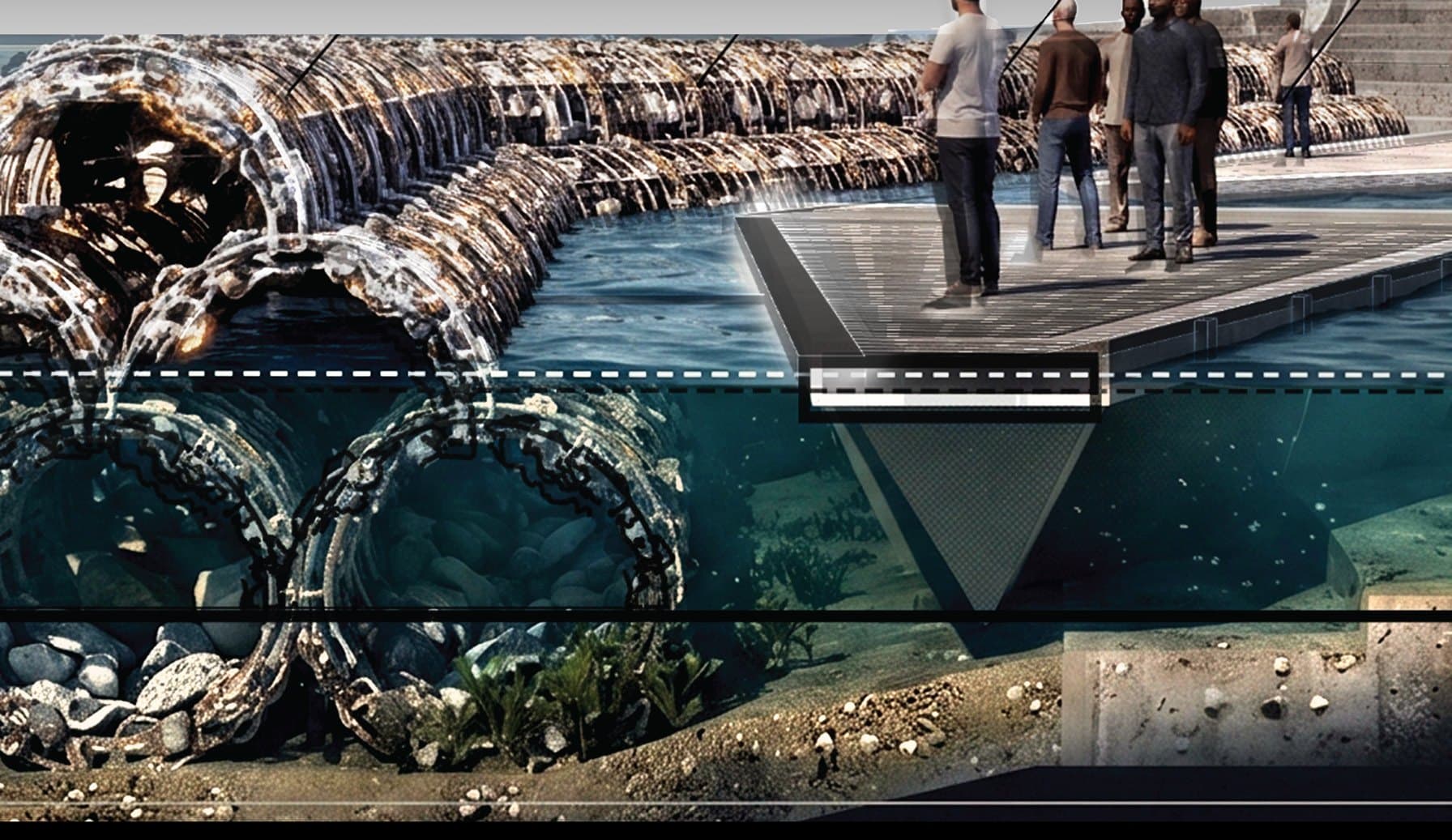
From component to public shore. The Living Lab investigates modular reef configurations using shell material, habitat structures and mineral accretion. The assembly combines shell-filled geotextile bags, an electrified cage associated with Biorock accretion, and bases or anchors. Floating platforms and water-edge activities extend the proposition into public space.
The research agenda connects the component to the coastal conditions in which it would operate. The proposal identifies wave attenuation, biodiversity, durability and public perception as subjects for observation. These intended measurements should inform the next design decisions: how units are configured, how they are installed and accessed, and how the assembly is inspected and maintained. The aim is to develop an ecological and infrastructural interface whose contribution can be assessed over time. Its protective and ecological ambitions remain questions for the research programme.
Steering team: SUTD; Mlion Corporation Pte. Ltd.; Witteveen+Bos South-East Asia. Living Lab support: PUB. Exhibition sponsorship: SUTD Sustainable Futures Centre.